Appian Senior Developer Exam: Key Topics Revealed
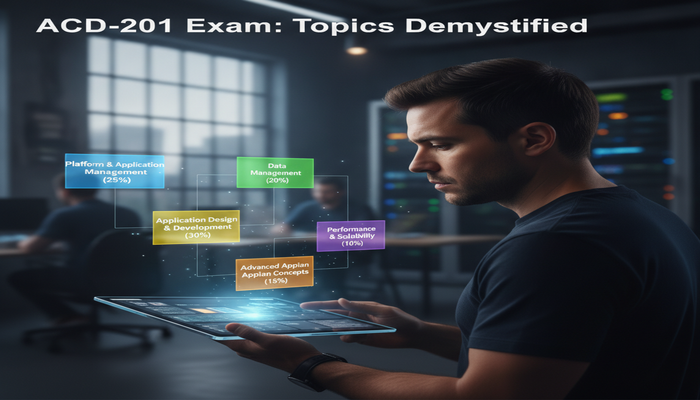
Are you an Appian developer looking to validate your advanced skills and take your career to the next level? The Appian Certified Senior Developer exam (ACD-201) is designed precisely for professionals like you. In today's fast-paced digital landscape, low-code platforms are becoming indispensable, and Appian stands out as a leader. Achieving senior developer certification not only solidifies your expertise but also opens doors to more complex projects, leadership opportunities, and enhanced career prospects.
This comprehensive guide will demystify the ACD-201 exam, breaking down its syllabus, offering insights into each key topic area, and providing a clear roadmap to help you prepare effectively. Whether you're a seasoned developer or aspiring to reach senior status, understanding the core components of this exam is your first step towards success. Let's dive into the critical knowledge areas that you'll need to master.
Exam Overview: Your Path to Appian Senior Developer Mastery
The Appian Certified Senior Developer certification signifies a high level of proficiency in designing, developing, and deploying complex solutions on the Appian platform. It validates your ability to tackle advanced scenarios, optimize application performance, and implement best practices across various technical domains. This certification is ideal for experienced Appian developers who have worked on multiple projects and are ready to demonstrate their comprehensive understanding of the platform's capabilities.
Key Exam Details
Before embarking on your study journey, it's essential to understand the fundamental details of the exam. Knowing what to expect regarding format and structure can significantly aid your preparation strategy.
- Exam Name: Appian Certified Senior Developer
- Exam Code: ACD-201
- Exam Price: $250 USD
- Duration: 60 minutes
- Number of Questions: 50
- Passing Score: 60%
The Appian Certified Senior Developer credential serves as a testament to your in-depth knowledge and practical skills. It enhances your professional credibility and positions you as an expert in the Appian ecosystem. For more information and to explore the detailed certification requirements, you can visit the official Appian Senior Developer certification page.
Unpacking the ACD-201 Syllabus: What to Expect
The ACD-201 exam covers a broad spectrum of Appian development topics, reflecting the multifaceted role of a senior developer. The syllabus is thoughtfully structured to assess your understanding of core Appian concepts, advanced features, and critical considerations for building high-performing, scalable applications. Each section carries a specific weight, indicating its importance in the overall exam.
Understanding this distribution allows you to allocate your study time wisely, focusing more on areas with higher percentages. For a detailed breakdown of all topics and sub-topics, refer to the Appian Senior Developer exam syllabus.
1. Platform and Application Management (12%)
This section tests your knowledge of how to manage Appian applications and the platform itself. It's about ensuring applications are deployed, secured, and maintained effectively within an Appian environment. Key areas include:
- Application Deployment: Understanding the lifecycle of Appian applications, including export, import, and version control best practices. This involves recognizing dependencies and handling deployments across different environments (development, test, production).
- Security Management: Implementing robust security models within Appian. This covers user and group management, role-based access control, object security, and securing sensitive data. You should be familiar with security best practices and common pitfalls.
- Environment Configuration: Managing and configuring various Appian environments. This includes understanding system properties, connected systems, and data source configurations.
- Monitoring and Maintenance: Basic knowledge of how to monitor application health, troubleshoot common issues, and perform routine maintenance tasks to ensure optimal performance and availability.
Mastering this domain ensures that you can not only build applications but also effectively manage them throughout their entire lifecycle, ensuring stability and adherence to security policies.
2. Data Management (20%)
Data is the backbone of any enterprise application, and this section focuses on your ability to design, implement, and manage data within the Appian platform. A senior developer must be adept at handling data efficiently and integrating it seamlessly.
- Data Modeling: Designing effective data structures using Appian Record Types. This includes understanding relationships between entities, configuring fields, and leveraging different data sources (database, web service, process).
- Data Integration: Connecting Appian applications with external data sources and systems. This involves using connected systems, integrations, web APIs, and understanding data synchronization strategies.
- Record Types and Views: Advanced usage of Record Types, including creating dynamic record views, designing record actions, and leveraging filters and facets for enhanced user experience.
- Reporting and Analytics: Building insightful reports and dashboards using Appian's reporting capabilities. This includes understanding aggregations, data manipulation, and presenting data effectively to end-users.
- Performance Considerations in Data: Designing data models and integrations that are optimized for performance, minimizing latency, and handling large volumes of data efficiently.
A strong grasp of data management principles is crucial for building scalable and performant Appian applications that meet complex business requirements.
3. Application Design and Development (28%)
This is the largest and arguably most critical section of the exam, emphasizing your hands-on ability to design and develop sophisticated Appian applications. It covers the core building blocks and best practices for creating engaging and functional user experiences.
- Interface Design (SAIL): Developing complex and dynamic user interfaces using Appian SAIL (Self-Assembling Interface Layer). This includes advanced component usage, dynamic visibility, validation, and designing for different devices (responsive design).
- Process Model Design: Creating intricate and robust process models to automate business workflows. This involves understanding advanced smart services, exception handling, sub-processes, process variables, and designing for reusability.
- Expression Language (a!): Mastering Appian's expression language for data manipulation, logic implementation, and dynamic content generation. This includes using advanced functions, understanding contexts, and optimizing expressions for performance.
- Rules and Decisions: Implementing complex business logic using decision objects, expression rules, and integration rules. Understanding when to use each and how to structure them for maintainability and scalability.
- Design Patterns and Best Practices: Applying established design patterns for common application requirements and adhering to Appian's recommended best practices for maintainability, performance, and scalability. This includes modular design, naming conventions, and code organization.
- Testing and Debugging: Strategies for testing Appian applications, including unit testing interfaces, process models, and expressions. Utilizing debugging tools and techniques to identify and resolve issues efficiently.
Excelling in this domain requires not just theoretical knowledge but also practical experience in building a variety of Appian solutions.
4. Advanced Appian Concepts (18%)
This section delves into more specialized and advanced features of the Appian platform, moving beyond the fundamentals. It assesses your capacity to leverage Appian's full potential for complex scenarios.
- Advanced Integrations: Deeper understanding of integrating with external systems, including advanced web service configurations (SOAP/REST), handling complex data structures in integrations, and error handling for external calls.
- Plugins and Custom Functions: Knowledge of how to utilize and, if necessary, develop custom plugins and functions to extend Appian's out-of-the-box capabilities. This includes understanding their lifecycle and security implications.
- AI/ML Capabilities: Understanding how to integrate and leverage Appian's AI capabilities, such as Intelligent Document Processing (IDP), Robotic Process Automation (RPA), and other cognitive services, to enhance application intelligence.
- Sites and Portals: Designing and configuring Appian Sites and Portals for external users, understanding their security implications, and how they differ from standard Tempo/Record interfaces.
- Security Enhancements: Advanced security topics such as encryption at rest/in transit, managing sensitive data, and integrating with enterprise identity providers.
Proficiency in these advanced concepts distinguishes a senior developer capable of implementing sophisticated and cutting-edge solutions.
5. Performance & Scalability (22%)
A crucial aspect for any senior developer is the ability to design and build applications that perform well and can scale to meet growing demands. This section focuses on optimization and architectural considerations.
- Performance Monitoring: Utilizing Appian's out-of-the-box tools and best practices for monitoring application performance, identifying bottlenecks, and analyzing system health.
- Optimization Techniques: Implementing various strategies to optimize the performance of interfaces, process models, queries, and integrations. This includes efficient use of data calls, caching strategies, and asynchronous processing.
- Scalability Considerations: Designing applications that can handle increased user loads and data volumes without degradation in performance. This involves understanding horizontal and vertical scaling within the Appian architecture.
- Deployment Best Practices for Performance: Understanding how deployment strategies can impact performance and ensuring that applications are deployed in a way that maximizes efficiency and minimizes downtime.
- Troubleshooting Performance Issues: Advanced techniques for diagnosing and resolving performance-related problems in live Appian applications.
This domain ensures that certified senior developers can build resilient and efficient Appian solutions that stand the test of time and usage.
Preparing for Success: Your Study Roadmap
Passing the Appian Certified Senior Developer exam requires a structured and dedicated approach to studying. Here are some effective strategies to help you on your journey:
Effective Study Strategies
- Review Official Documentation: The Appian documentation is an invaluable resource. Dive deep into the topics covered in the syllabus, paying close attention to best practices and advanced configurations.
- Hands-on Practice: Theory alone isn't enough. Spend significant time building complex applications in a development environment. Experiment with different features, integrate with external systems, and intentionally create scenarios that challenge your problem-solving skills.
- Appian Community and Forums: Engage with the Appian community. These forums are excellent places to ask questions, learn from others' experiences, and find solutions to common challenges.
- Take Practice Tests: While official practice tests might be limited, try to create your own questions or utilize any available resources to test your knowledge under timed conditions.
- Focus on Weak Areas: Identify the syllabus topics where you feel less confident and dedicate extra study time to those areas. The percentage breakdown of the syllabus can guide your focus.
- Stay Updated: Appian is a rapidly evolving platform. Keep abreast of the latest releases and new features, as they might influence best practices and optimal solutions.
When you're ready to test your knowledge, you can schedule your ACD-201 exam through the official channels. For those aiming to advance even further, explore outstanding study tips to become an Appian Lead Developer, which provides additional insights into career progression within the Appian ecosystem.
Career Impact of Appian Senior Developer Certification
Achieving the Appian Certified Senior Developer certification significantly boosts your career trajectory. In an increasingly competitive job market, certifications act as tangible proof of your skills and dedication. For Appian professionals, this certification can translate into several key benefits:
- Enhanced Job Opportunities: Many organizations actively seek certified Appian developers for senior roles, knowing they possess a verified skillset. This certification makes your resume stand out to potential employers.
- Increased Earning Potential: Senior developers with specialized certifications often command higher salaries. Your expertise in advanced Appian concepts and best practices is a valuable asset.
- Leadership Roles: With senior certification, you're better positioned to take on lead developer roles, mentor junior developers, and guide technical strategy for Appian projects.
- Credibility and Recognition: The certification provides industry-wide recognition of your advanced capabilities in the Appian platform, fostering trust and confidence among peers and clients.
- Stay Ahead of the Curve: The process of preparing for and earning the certification ensures you are up-to-date with the latest Appian features and best practices, keeping your skills relevant in a rapidly evolving tech landscape.
The demand for skilled software developers, including those proficient in low-code platforms like Appian, continues to grow, as highlighted by the U.S. Bureau of Labor Statistics. This trend underscores the long-term value and career stability offered by specialized certifications like the Appian Senior Developer credential.
Frequently Asked Questions (FAQs)
1. What experience level is recommended for the Appian Senior Developer exam?
It is generally recommended that candidates have at least 1-2 years of hands-on experience working with the Appian platform, specifically in designing and developing complex applications. Practical experience with the topics outlined in the syllabus is crucial.
2. How long should I study for the ACD-201 exam?
Study time can vary significantly based on your current experience. For an experienced Appian developer, a few weeks of focused study, reviewing documentation, and practicing advanced concepts might suffice. Newer developers might need several months.
3. Are there official Appian training courses specifically for the Senior Developer exam?
While Appian offers various learning resources and academy courses, there isn't one single "exam prep" course. It's recommended to go through advanced Appian Academy courses that cover the syllabus topics in depth, combined with practical project experience.
4. What kind of questions can I expect on the Appian Senior Developer exam?
The exam consists of multiple-choice questions designed to test your understanding of Appian concepts, best practices, troubleshooting, and design patterns. Questions often present scenarios requiring you to choose the most efficient or correct Appian solution.
5. What happens after I pass the Appian Senior Developer exam?
Upon passing, you will earn the Appian Certified Senior Developer credential, which can be displayed on your professional profiles. You'll also typically receive a digital badge. This achievement is valid for a certain period, after which recertification might be required to ensure your skills remain current.
Conclusion: Chart Your Course to Appian Expertise
The Appian Certified Senior Developer (ACD-201) exam is a significant milestone for any Appian professional. It's a comprehensive assessment of your ability to design, develop, and manage sophisticated applications on the Appian low-code platform. By understanding the detailed syllabus, focusing on critical areas like data management, application design, and performance, and dedicating yourself to hands-on practice, you can confidently approach the exam.
This certification not only validates your expertise but also significantly enhances your career trajectory, opening doors to more challenging roles and greater professional recognition. Investing in your Appian certification is an investment in your future, ensuring you remain a highly sought-after expert in the rapidly growing low-code development space. Understanding common pitfalls can significantly improve your preparation; learn why most get the ACA-100 exam wrong and how to avoid it to refine your study strategy. Begin your preparation today and unlock your full potential as an Appian Senior Developer.


Comments
Post a Comment